Miles from Any River: How First-Time Buyers Should Read Surface-Water Flood Risk Before Offering
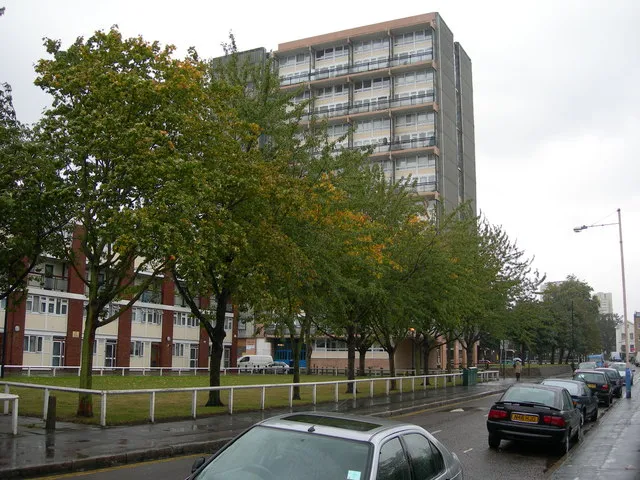
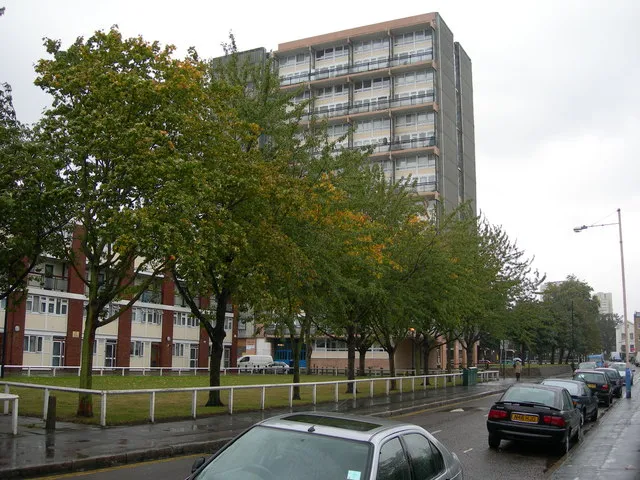
Photo: Danny Robinson, CC BY-SA 2.0, via Wikimedia Commons
Most first-time buyers begin their flood research with a single question: is the house near a river? It is a reasonable instinct and an incomplete one. Some of the most persistent flooding in the UK occurs many miles from any main river, when rainfall overwhelms drains, gullies and soakaways that were never designed for the volume now arriving. The water has nowhere to go, and it goes instead into halls, kitchens and airbrick-level floors.
Surface-water flooding — often called pluvial flooding — is the risk that does not appear in the photograph of a pleasant street on a dry Tuesday in spring. It is worth understanding before you offer, not after your solicitor's environmental search lands.
Why surface water is the overlooked risk
River and sea flooding is comparatively easy to picture: there is a watercourse, a floodplain and a well-known history. Surface-water flooding depends on rainfall intensity, ground gradient, drainage capacity and, increasingly, the extent of hard surfacing. A new housing estate uphill from a period terrace can alter where water collects. A culverted stream running beneath a row of 1930s semis may not be marked on any sign, and may not cope.
Climate projections used in planning assume more frequent intense summer and autumn downpours. A location that flooded once in thirty years in the 1990s may now be looking at a considerably shorter return period.
What the official maps show, and what they cannot
The Environment Agency publishes a flood map for planning and a separate long-term flood risk service aimed at households. Both include a surface-water layer, usually presented in bands indicating the chance of flooding from rainfall in any given year. Read the accompanying text as carefully as the shading: the maps are strategic and indicative, produced at a coarse resolution, and they do not account for every drain, wall or local level change that determines what actually happens on a particular driveway.
A property shown outside the shaded area is not certified safe. A property inside it is not automatically uninsurable. The map is a prompt to ask better questions, not a verdict.
Council records worth requesting
Since the Flood and Water Management Act 2010, county and unitary authorities act as Lead Local Flood Authorities, with a duty to investigate significant local flooding and to maintain a register of assets such as culverts, ditches and balancing ponds. Ask the council whether a Section 19 investigation report exists for the area, and whether a Surface Water Management Plan covers the ward.
Water and sewerage companies hold registers of reported internal sewer flooding — frequently referred to as the DG5 register — which record repeat incidents. These are not always freely searchable property by property, but the company can confirm whether an address has a history. Your conveyancer's standard enquiries and the seller's property information form will also ask direct questions about flooding and insurance claims; the answers are evidence, and inconsistency between them and the council's records is a legitimate reason to press further.
Ground-level evidence on a viewing
Flood risk is often visible in small details, provided you look at the outside of the building as attentively as the inside.
- Look at the plinth, the base of the walls and the lower render for tide marks, blown plaster or recent repainting that stops abruptly at a consistent height.
- Check the thresholds: are the front and back doors raised above pavement level, or does the paving slope towards them?
- Note gullies, gratings and ditches nearby, and whether they are clear or silted. A blocked kerb gully on a wet day tells you something.
- Ask about the age of any rear extension or garden room, and whether permeable paving or a soakaway was installed.
- Visit after heavy rain if you can. Twenty minutes in December will teach you more than an hour in June.
- Check whether neighbouring gardens sit higher, and where the water would run if the drain outside could not take it.
If the property has a basement or a cellar, treat the drainage question as material rather than cosmetic, and consider a specialist drainage survey with CCTV of the runs serving the house. It is a modest cost against the price of a first home.
Questions to put to the seller
Ask directly whether the property, garden or garage has ever flooded, and if so when, how deep and what was done afterwards. Ask whether a claim was made on buildings insurance and whether the excess was increased as a result. Ask whether any flood resilience measures — non-return valves, raised sockets, flood doors, sump pumps — have been fitted, and whether they were specified by a professional. Ask who maintains any private drainage or SuDS feature serving the property, and where responsibility sits if it fails.
A seller who answers openly is not a problem. A seller who deflects is a reason to instruct your own investigations.
Insurance, lending and the 2026 position
Flood Re, the reinsurance scheme, continues to underpin household flood cover for many eligible properties in the UK, but it is not a policy and it does not oblige any insurer to quote. Eligibility rules exclude certain homes, and a history of repeated claims can still produce a premium and excess that materially affect affordability. Obtain more than one quotation, in writing, before exchange rather than after.
Lenders vary in how they treat flood risk. Some will lend where insurance is available at reasonable cost; others will decline a property in a higher-risk band outright. Ask your broker early, because this is one of the few survey-adjacent issues that can end a purchase after valuation.
Turning the risk into a negotiating position
Risk is not a reason to walk away by default. It is a reason to price accurately. If the evidence points to genuine exposure, three responses are open to you: ask the seller to commission remedial drainage work before exchange; seek a reduction reflecting the cost of resilience measures and inflated insurance premiums; or accept the property with your eyes open and budget for both.
Whatever you choose, record the reasoning in writing. The value of a flood investigation lies less in the answer it gives than in the fact that you asked the question while you could still act on it.