The Fifteen-Minute Audit: How Your Weekly Routine Should Choose Your Next Home
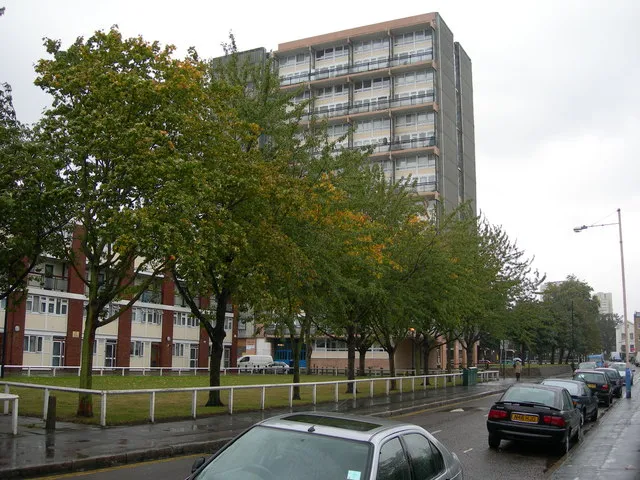
Photo: Danny Robinson, CC BY-SA 2.0, via Wikimedia Commons
A property viewing tells you how a home looks at a chosen hour on a chosen day. It rarely tells you how the location performs on a wet Tuesday morning, a Saturday food shop or a late return from the station. For most households, the quality of daily life is shaped less by the finish of the kitchen than by the repeated journeys that surround it. The fifteen-minute audit is a simple way to test a location against your real weekly routine rather than the estate agent’s phrasebook.
Begin with the week you actually live
Before visiting a property, write down every journey you make in a typical week. Include the obvious ones — work, school or nursery, the food shop, the gym — and the ones that are easy to overlook: a GP or pharmacy visit, caring responsibilities, a place of worship, weekend football, evening classes, and the route home after dark. Note how often each trip occurs, whether it is time-sensitive, and whether you would walk, cycle, drive or use public transport.
This list should be honest. If you drive to a supermarket twice a week, do not assume you will suddenly walk to a small convenience store because the brochure describes the area as walkable. If you work from home three days a week, weight the commute accordingly. The aim is not to create a perfect score but to expose the journeys that would become a daily irritation.
A simple scoring method
For each journey, rate the location from zero to three on three measures: door-to-door time, reliability, and comfort or safety. A score of zero means the journey is impractical or unacceptable; three means it is easy and dependable. Then apply a weight based on frequency. A five-day commute might carry a weight of five, a weekly shop a weight of two, and an occasional GP visit a weight of one.
Multiply the weight by the rating to produce a journey score. Add the scores together, but do not let a high total hide a zero. If an essential journey scores zero, the location has a fundamental problem, however attractive the property. For renters, the same method applies; a short tenancy can still be blighted by a difficult school run or an unreliable bus.
Test at the times you will travel
Travel-time estimates are often calculated off-peak, from a point near the property rather than the front door, and without allowing for waiting, parking or walking from the station. Treat them as a starting point only. Visit at 8am on a weekday, at 8.30am during the school run, on a Saturday morning for the food shop, and late on a Friday or Saturday evening if you will be returning after dark.
Time the walk to the station or bus stop yourself. Check the frequency of services after 9pm and on Sundays. Look at pavement widths, crossings, street lighting and the volume of traffic. If you cycle, test the route rather than assuming a quiet road on the map will feel quiet in practice.
Questions for a second viewing
A second viewing is the moment to ask practical questions. Ask the seller or agent about bus and train frequencies at off-peak times, parking pressure, bin collection days, broadband availability and any known flooding or drainage issues. Ask whether the property falls within a school catchment area, but understand that catchment is not a guarantee of a place. Ask about planned roadworks, new developments nearby and any restrictions that affect the route to the station or shops.
Where possible, speak to neighbours. They can tell you about noise, parking, antisocial behaviour and the reliability of local services in a way that no particulars document will. If you are renting, ask about the break clause and how easy it would be to leave if the commute proves unsustainable.
Cautions about estimates and hype
Be wary of travel-time claims that rely on straight-line distances or assume a bus will arrive exactly when the timetable suggests. Be equally cautious about the phrase up-and-coming. A planned transport link, new supermarket or leisure centre may be years away, may change in scope, or may never happen. Check the local planning register and the local plan, and look for firm opening dates rather than aspirational language. Vibrancy can also mean noise; a lively high street is an asset to some buyers and a nuisance to others.
What the score is for
The fifteen-minute audit is not a substitute for professional advice or a survey. It is a way to compare two or three properties on the same basis and to have a more useful conversation about trade-offs. A home that fits your week is more likely to fit your life, and a location that works for your routine is likely to remain attractive to future buyers and tenants. At McKenzie Estates, we encourage buyers and renters to visit at the times that matter to them, not only at the times that suit a diary.