Reading the Planning Register Before You Offer: A Buyer’s Guide to Nearby Development Risk
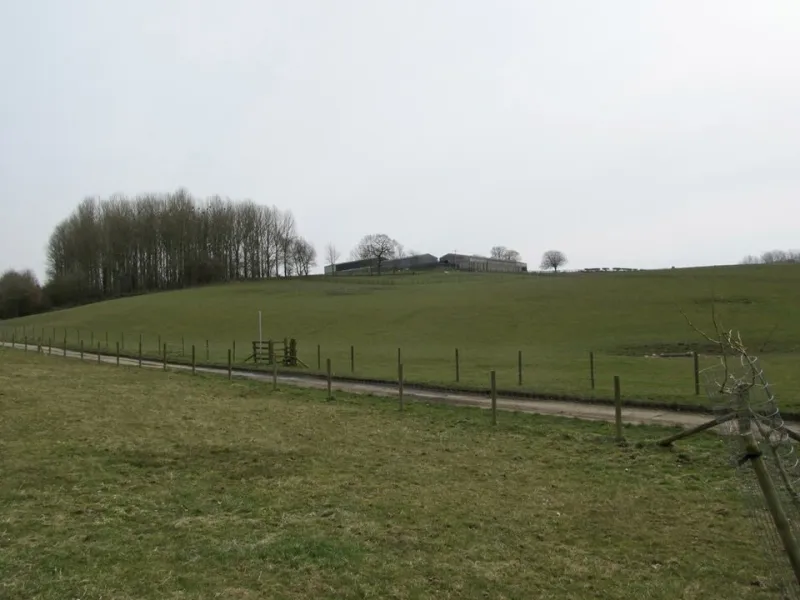
Photo: Ian Rob , CC BY-SA 2.0, via Wikimedia Commons
Buying a home is rarely just a decision about the property itself. It is also a decision about the street, the neighbourhood and the kind of development that may be permitted around it in the years ahead. In England and Wales, much of that information is publicly available before an offer is made. A measured review of the local planning register can therefore be as valuable as a second viewing.
This is not about treating every application as a threat. Many schemes improve an area, and a well-designed extension or modest infill development may have little effect on day-to-day life. The purpose of a planning audit is to separate routine change from proposals that could genuinely affect light, noise, access, privacy or resale value.
Begin with the Local Plan, not the application portal
The planning register is the most visible part of the system, but it is not the starting point. First, find the local authority’s adopted Local Plan and its proposals map. These documents identify site allocations: land the council has earmarked for housing, employment, retail, transport or mixed use. An allocation is not the same as planning permission, but it signals the direction of local policy.
Check whether the property sits near an allocated site, a regeneration corridor, a proposed relief road or a safeguarded employment area. Also look for an emerging Local Plan, a neighbourhood plan and the brownfield land register. In some areas, a site may have no current application but may be identified for future development. That distinction matters when considering how long you expect to own the property.
Search the register methodically
Local authority planning portals vary in design, but most allow a search by address, postcode, ward or map. Search the subject property first, then widen the search to the surrounding streets. In dense urban areas, a radius of 100 to 250 metres is often sensible; in rural or edge-of-settlement locations, a wider review may be appropriate.
Do not limit the search to pending applications. Review recent decisions, appeals, enforcement notices and applications that have been withdrawn or resubmitted. An outline permission can be particularly important because it establishes the principle of development while leaving detailed matters, such as scale and appearance, to a later reserved matters application.
Read the documents attached to the largest or most relevant applications. The planning statement explains the case being made; the design and access statement usually covers scale, layout and access; transport and noise assessments may address matters that affect neighbouring occupiers. Conditions and Section 106 agreements can also shape what is built, when it is occupied and what contributions are made to local infrastructure.
Site allocations and permitted development
Not all change requires a planning application. Permitted development rights allow certain extensions, alterations and changes of use without formal permission, although local Article 4 directions can remove those rights in sensitive areas. Conservation areas, listed buildings and areas of high housing pressure may have additional controls.
A buyer should therefore check the local authority’s constraints map alongside the planning register. Look for conservation area boundaries, flood risk zones, green belt, safeguarded land and Article 4 directions. These designations do not automatically prevent development, but they change the context in which applications are considered.
Red flags that can affect enjoyment and value
Several types of proposal deserve closer attention. A tall building or a large rear extension close to a boundary may affect daylight, outlook and privacy. A change of use to a house in multiple occupation, a late-night venue or a commercial operation may introduce noise and movement at different hours. New accesses, highway alterations or parking restrictions can change the practical use of a street.
Also consider construction disruption, drainage and flood risk, loss of trees or hedgerows, and the cumulative effect of several small applications. A single modest scheme may be manageable; a cluster of applications can alter the character of a street over time. None of these points is automatically decisive, but they should inform the price you offer and the questions you ask before exchange.
Questions to ask the seller and the council
Ask the seller whether they are aware of any nearby applications, enforcement notices, disputes or proposed highway works. Ask whether any covenants, easements or local charges affect the land. A seller is not obliged to provide a planning commentary, but their answers can be revealing.
Direct questions to the local planning authority are equally useful. Ask whether the property or nearby sites have any planning history, whether there are outstanding enforcement matters, and whether the site is affected by an Article 4 direction, conservation area designation or site allocation. The duty planning officer can explain the public register, although they cannot give legal advice on a transaction.
A simple pre-offer checklist
- Locate the adopted Local Plan and proposals map.
- Check the brownfield land register and any emerging Local Plan.
- Search the planning register by postcode and by map.
- Review applications within at least 100 to 250 metres.
- Read the design, access, transport and noise documents for significant schemes.
- Check appeals, enforcement notices and withdrawn applications.
- Confirm conservation area, Article 4, flood risk and green belt constraints.
- Ask the seller about notices, disputes and known proposals.
- Speak to the council’s duty planning officer.
- Instruct a solicitor to include planning and local search enquiries.
A planning audit will not eliminate uncertainty. It will, however, give you a clearer view of what could be built next door, how the local authority is likely to respond and whether the asking price reflects the context you are buying into. In a market where buyers are expected to act quickly, that evidence is worth taking a little time to gather.