The Compass Premium: How to Verify Daylight Before You Pay for an Aspect

Photo: Richard Webb, CC BY-SA 2.0, via Wikimedia Commons
Estate agency particulars have a familiar shorthand: south-facing garden, bright and airy, sun-filled reception room. Each phrase carries an implied premium. In a competitive market that premium can be material, yet orientation is a crude proxy for daylight. A due-south window can preside over a permanently shaded room if a neighbouring wall, a mature tree or a deep reveal intervenes. Before treating a compass point as a price justification, buyers should audit what the aspect actually delivers.
Orientation is a starting point, not a guarantee
In the northern hemisphere the sun rises in the east, climbs toward the south and sets in the west. In summer it rises north of east and sets north of west, reaching a high arc; in winter it stays low and southerly. A south-facing elevation receives the most direct light around midday throughout the year, but a south-facing garden may receive sun from early morning to late afternoon in June and only a narrower band in December. Conversely, a west-facing room can be darker in the morning but generous in the evening, which may suit occupants more than a theoretical southerly maximum.
The distinction between the orientation of a garden and the orientation of the windows you will actually use matters. A garden described as south-facing may sit to the south of the house, while the principal reception room faces east. Ask the agent to state which elevation each main room occupies, and check that against a plan rather than relying on the headline phrase.
Measure the opening and the room behind it
Daylight is not only direct sun. A large window admits diffuse light even on overcast days; a small window in a deep reveal does not. Record the width and height of principal windows, the depth of reveals, and the presence of balconies, canopy roofs or tall fences. Consider the depth of the room: light falls away quickly, so a south-facing front reception room may be bright at the bay and dim at the rear. Glazing type, blinds and internal walls all modify the result.
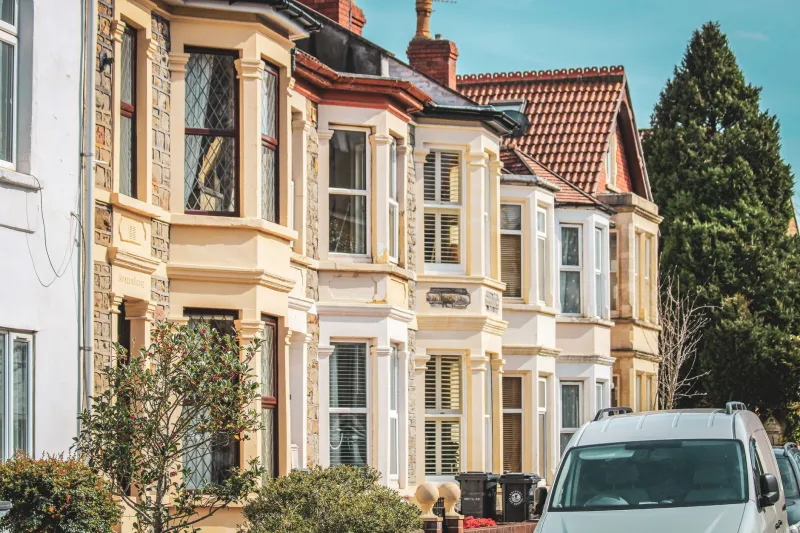
A south-facing aspect is often marketed as superior, but a small sash window in a listed cottage may admit less usable light than a larger north-facing window in a modern flat. The quality of the opening, its sill height and the amount of sky it frames are practical measures that a compass point cannot capture.
Obstructions cast the longest shadows
Walk the boundary and look beyond it. Neighbouring two-storey extensions, boundary walls, hedges, outbuildings and mature trees can remove hours of direct sun. A tree may be protected by a Tree Preservation Order or sit within a conservation area, which limits pruning and felling. That protection is valuable, but it also means the shade is unlikely to disappear. Ask the seller for any tree surveys, maintenance records or disputes, and check the local authority's online mapping for Tree Preservation Orders before you offer.
Shade is not always a defect. A mature tree can provide privacy and cooling in summer, and some buyers prefer dappled light to direct glare. The point is to know what you are buying. If the principal selling point is a sunlit garden, verify how much of the garden is sunlit at the times you would use it.
Check planning permissions next door
Use the local planning authority's public register to review applications and decisions near the property. A proposed rear extension, a loft conversion or a change of use can alter light. Permitted development rights allow some works without a planning application, so ask the seller and your solicitor what has been built and what may follow. A right to light is not a universal entitlement; it can exist as an easement acquired over time, but it is a legal question rather than a selling-point assumption. Your conveyancer can advise on any known notices or easements.
A neighbouring planning application is not proof that light will be lost, but it is a reasonable prompt for questions. Check the plans, the height of the proposed structure and its distance from your windows. If the property is in a conservation area or near a listed building, the planning history may also reveal constraints that affect future alterations.
Visit at the right times and seasons
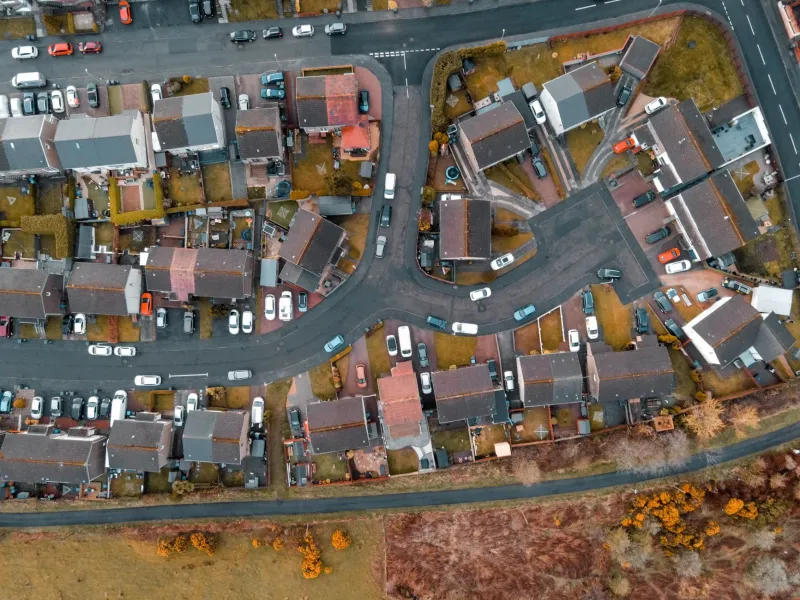
One viewing at midday in July is insufficient. Request access at different times, ideally in winter as well as summer. A low winter sun can expose obstructions that a high summer sun clears. Use a sun-tracking app with the property's address, and consult an Ordnance Survey map for contours and building footprints. Aerial imagery and Street View are useful, but check the image dates. Note the difference between the orientation of the garden and the orientation of the windows you will actually use.
A cloudy-day viewing is also instructive. It shows how much diffuse light reaches the rooms when direct sun is absent, which is the condition for much of the UK year. If a room feels dim on an overcast afternoon, a south-facing label will not necessarily transform it in February.
Room-by-room questions to ask
Living room: which elevation receives direct sun, and for how many hours at midday in March and September? Kitchen: is morning light adequate, and is there glare at the sink? Dining area: does evening sun arrive in time for use, or is it blocked by the house next door? Bedrooms: an east-facing room may be bright at dawn, which suits some occupants and not others. Home office: direct south sun can create screen glare, so consider blinds and desk position. Bathroom: daylight helps, but ventilation matters more for damp. Garden: where does the sun fall at 4pm in June, and at noon in December? Patio and planting decisions follow from that.
These questions are not a substitute for a professional assessment on a high-value purchase, but they turn a vague selling point into a set of observable facts. The answers should be consistent with the plan, the title and the physical condition of the property.
The premium and the evidence
Compare sold prices for similar homes with different aspects. Ask the agent how the premium was calculated and whether it reflects verified daylight, garden size, condition or simply a label. If the asking price is thousands above a comparable north-facing house, the difference should be visible in the rooms, not only on a compass. For high-value purchases, a daylight or sunlight assessment can be commissioned; it is a modest cost against the price of a home.
Before you exchange
Make your offer subject to satisfactory checks. Ask for confirmation of tree protection, planning history and any known disputes. Visit again on a cloudy day as well as a sunny one. Daylight is a combination of orientation, opening size, obstruction and season. Pay for the light you can use, not for the word on the particulars.